
The Story of Usui Reiki
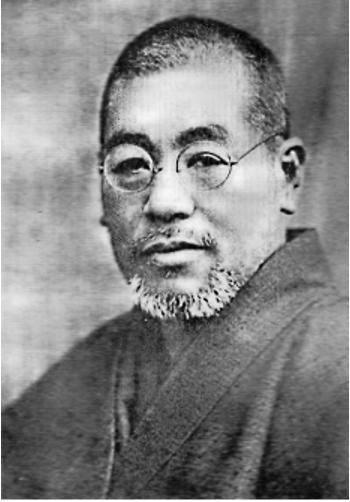
Mikao Usui & the Origins of Reiki
Reiki was founded in Japan in the early 1920s by Mikao Usui, a deeply spiritual man who lived during a time of great cultural change. Japan was modernizing rapidly, and many people sought a balance between Western Science and Eastern spiritual practice. Usui had studied Buddhism, martial arts, and ethics, and had a lifelong interest in the relationship between body, mind, and spirit.
In 1922, Usui embarked on an intensive 21 day, solo spiritual retreat on Mount Kurama near Kyoto, modeled after Shugendō ascetic practices (Buddhist esotericism,) which included fasting, meditation, and chanting. During this time, he underwent a deep meditative experience leading to satori (spiritual awakening.) In this state, he experienced a profound flow of life force energy (ki) and later found that he could transmit it through his hands - a phenomenon already familiar in Japanese spiritual traditions.
After his experience, Usui began experimenting with the energy on himself and others. He noticed that focused meditation, prayer, and compassionate intention seemed to facilitate healing responses. He founded a small group, the Usui Reiki Ryōhō Gakkai (“Usui Reiki Healing Method Society”), in 1922 in Tokyo.
In 1923, Japan experienced the Great Kantō Earthquake which devastated Tokyo and Yokohama. Usui and his students offered healing and comfort to survivors. This period profoundly deepened his focus on emotional and moral healing, not just physical relief. Because of this, he began to refine his teachings to include not only energy techniques.
Passing on the Tradition
As Usui approached the end of his life, he sought someone to carry on the Reiki tradition. His children were not interested, so he trained 16 Reiki Masters, including Dr. Chijuro Hayashi, whose dedication assured Usui that Reiki would continue with integrity and respect.
Dr. Chujiro Hyashi
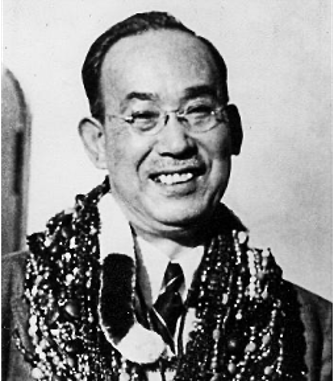
Dr. Chujiro Hyashi, a retired naval officer, was a devoted student of Dr. Mikao Usui. Drawing on his own experiences and Usui’s teachings, Hyashi helped refine and develop the Usui Reiki system. Together, they established the attunement process for each degree (Reiju, pronounced ray-yoo,) ensuring that the practice could be passed on with integrity.
Dr. Hyashi opened a Reiki clinic in Tokyo and served on the board of the Usui Reiki Ryoho Gakkai. Through meticulous record-keeping and observation, he created the standard hand positions, formalized the three degrees of Reiki, and developed a clear initiation procedure for students.
With the onset of a major war and the inevitability of being called back into military service, along with the compulsory enlistment of all young men, Dr. Hyashi chose to safeguard the future of Reiki by entrusting its lineage to two women: his wife and Mrs. Hawayo Takata. He deeply believed that the actions demanded of him in wartime would violate his moral principles, yet refusing service would bring unbearable shame upon his family. In a final act of both tragedy and honor, Dr. Hyashi chose ritual suicide, sacrificing himself to protect his family while ensuring that Reiki would live on through devoted successors.
Mrs. Hawayu Takata
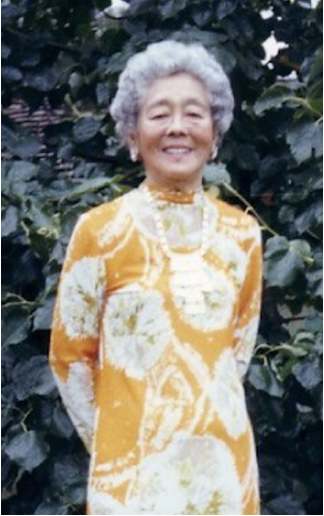
Hawayo Hiromi Takata was born on December 24, 1900, in Kauai, Hawaii, to Japanese immigrant parents who worked on sugar plantations. She was raised between two worlds - traditional Japanese culture and the emerging modern, Westernized society of Hawaii. Her upbringing gave her a rare ability to move between cultures, a skill that would later make her the perfect bridge for Reiki’s global journey.
By the 1930s, Takata was married with two young daughters. When her husband died in 1930, she worked tirelessly to support her family and developed several health problems - chronic abdominal pain, lung issues, and exhaustion.
In 1935, Takata traveled to Japan to visit family and seek medical treatment. At a hospital in Akashi, she was scheduled for surgery. As the story goes, while lying on the operating table, she heard a clear inner voice say, “The operation is not necessary.” When she questioned the doctor, she was told there was another option, a natural healing method at a clinic in Tokyo.
That clinic was the Hayashi Reiki Kenkyūkai (Hayashi Healing Institute.) There, Takata received daily Reiki treatments for several weeks. Her health improved dramatically, and she became deeply inspired by the practice.
After recovering, Takata requested to study Reiki. At first, Hayashi declined, saying the teachings were not traditionally given to women or foreigners. But Takata persisted, and her sincerity impressed him. She eventually became Hayashi’s student, learning the methods of Usui Reiki Ryōhō, which by then had been formalized with hand positions, symbols, and structured levels of training.
In 1936, Hayashi visited Hawaii with Takata to help her establish Reiki practice there. Together they treated many people, introducing Reiki to the Hawaiian community.
Before returning to Japan, Hayashi formally certified Takata as a Reiki practitioner and later as a master (shihan) - the first outside of Japan.
Takata opened her first clinic in Honolulu in 1937, offering Reiki and training others. However, the cultural climate of the time was difficult as anti-Japanese sentiment was high in pre-WWII America, and Buddhist and Asian practices were viewed with suspicion. To make Reiki accessible to Americans, Takata reframed the origin story and described Reiki in terms familiar to Christian and Western spiritual audiences.
This is when she began telling the “modified origin story” below, which is still taught to many even today:
According to the version shared by Hawayo Takata, Dr. Mikao Usui was a Japanese Christian minister and teacher who became determined to learn how Jesus healed the sick. His search led him through years of study in Japan, China, and India, where he explored Buddhist and ancient spiritual texts. Finally, he discovered ancient writings that described sacred healing symbols and methods once known to the Buddha. To fully understand them, Usui went on a 21-day fast and meditation retreat on Mount Kurama near Kyoto. On the final day, a great spiritual light entered through the top of his head, and the symbols of Reiki appeared before him. When he returned from the mountain, he realized he could heal with his hands. He first healed himself, then others, and began teaching what he called the Usui System of Natural Healing, the method now known as Reiki.
Some Western versions of the Reiki story describe a variety of other circumstances, including Usui seeing “bubbles of colored light” during his meditation on Mount Kurama, each containing the sacred Reiki symbols. This vision symbolizes his awakening to the universal healing energy now known as Reiki. Historically, this is understood as a poetic description of a deep spiritual experience rather than a literal event.
While this version isn’t historically accurate, it helped Reiki gain acceptance in a deeply prejudiced and religiously conservative time, allowing Takata to protect the practice and ensure its survival in the West.
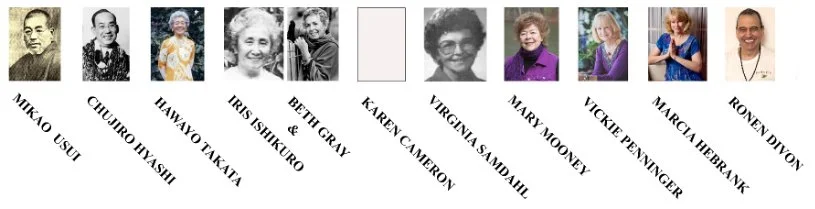
Mrs. Takata passed away in 1980 at the age of 80. Through the years she trained numerous people in the art of Usui Reiki. 22 of these went along to become Master-Teachers and taught others. My lineage is illustrated below.